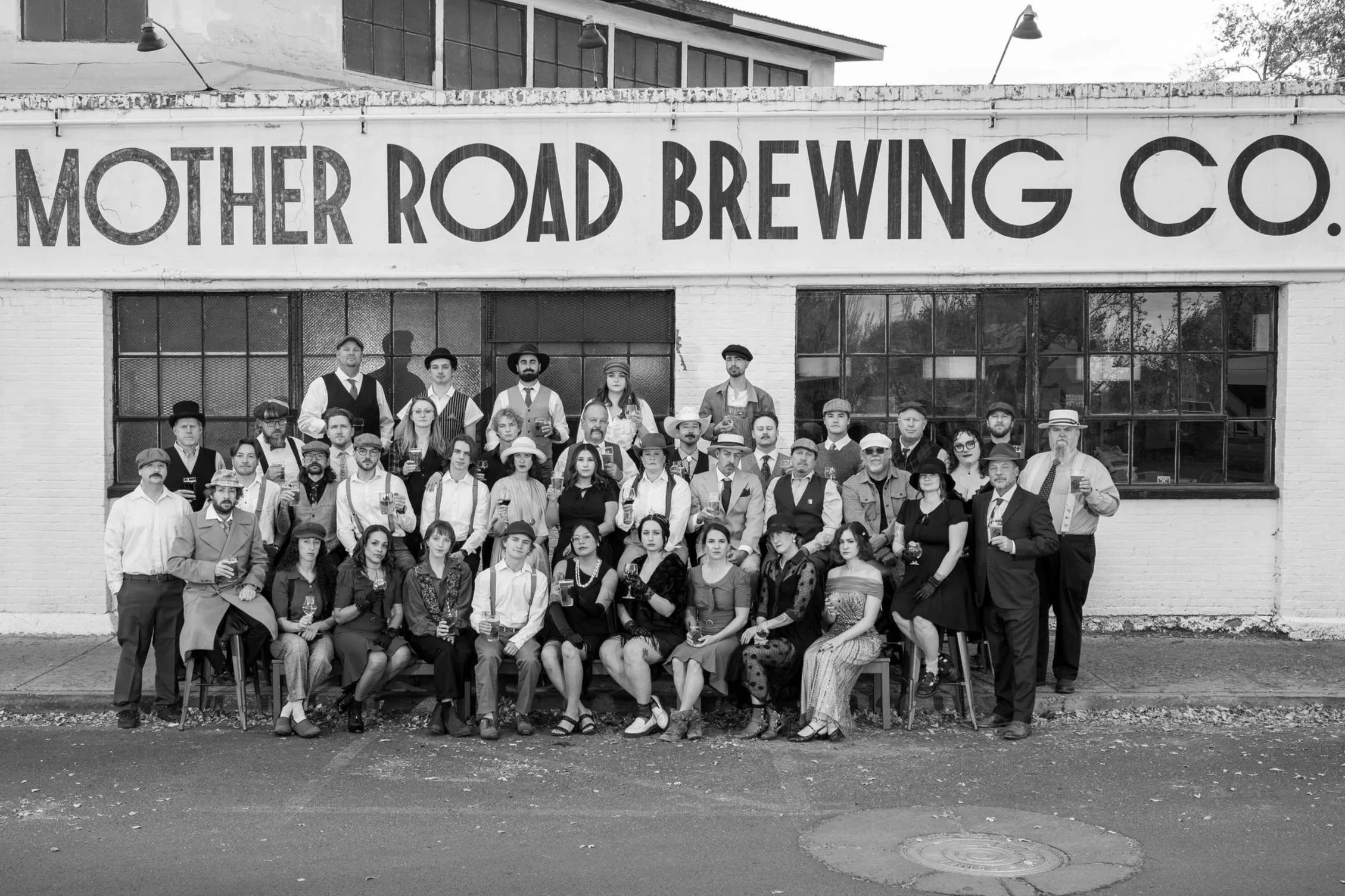
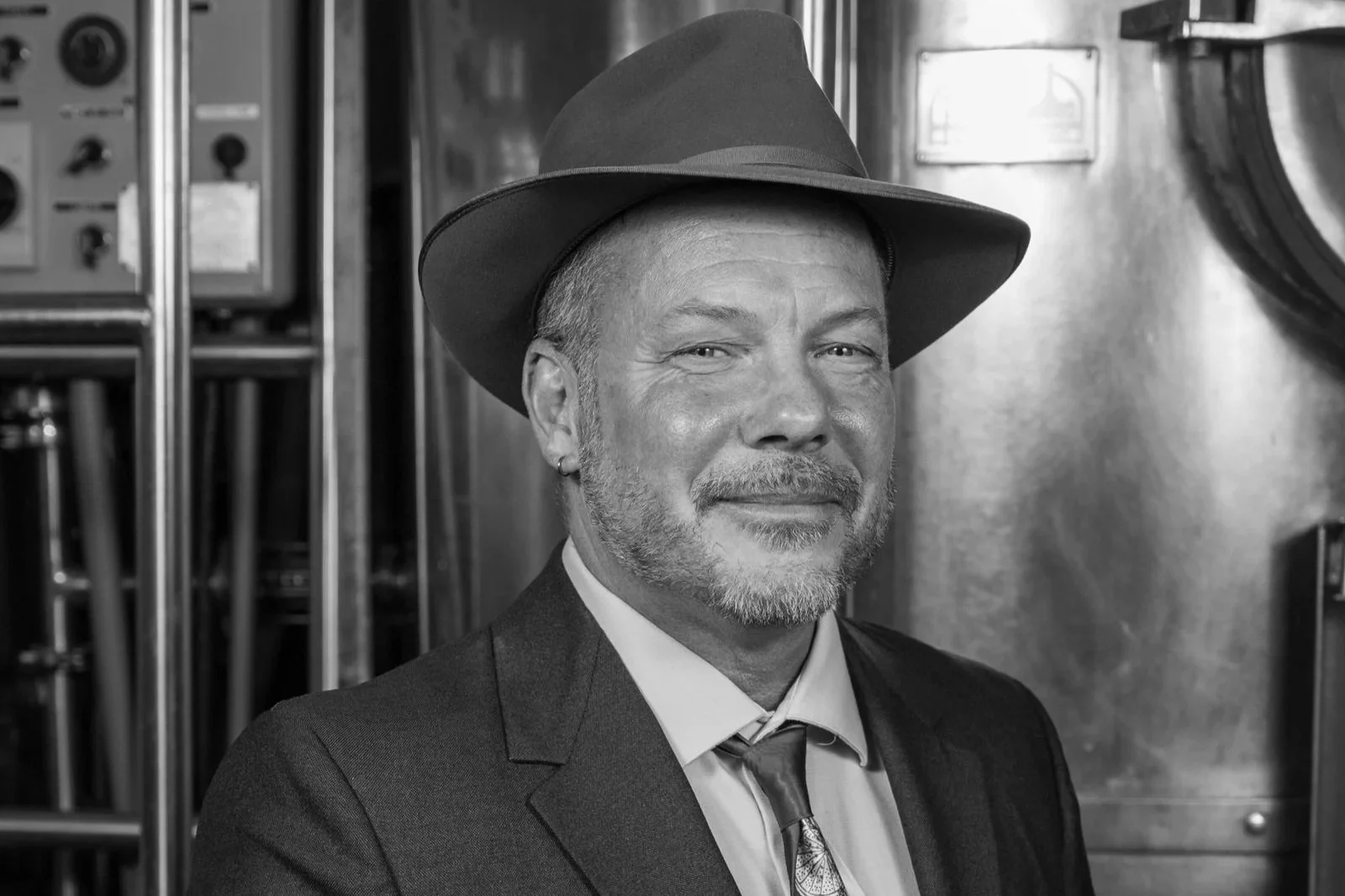
Michael Marquess came to Flagstaff in 1992 to attend NAU and later co-founded Mother Road Brewing Company in 2010. Over the past 15 years, Mother Road has grown into a beloved local business dedicated to building community one pint at a time
But Michael has watched valued employees leave Flagstaff because they could not see a path to homeownership. His experience shows how Flagstaff’s housing shortage reaches beyond individual households: It makes it hard for local businesses to recruit and retain skilled workers, and gives employees little opportunity to put down roots.
Tell me about Mother Road and how you ended up in Flagstaff.
I showed up in 1992 to attend NAU and, as my professors would remind me, did a bad job of leaving.
Mother Road came out of my co-founder’s and my passion for road trips, Southwest history, and this idea of finding joy in the adventure. We founded the brewery in 2010 and opened in 2011. Since then, it’s the good graces of the folks in Flagstaff—and eventually Arizona—that allowed our business to succeed.
It sounds like the business is pretty personal for you.
When you’re an entrepreneur, the business is always personal. You have to combine your passions with your work.
There’s great joy in having a crew of people you want to hang out with, inside of work and outside of work. My co-founder and I had a good idea 15 years ago, but it’s been every crew member since then that has placed their own fingerprint on Mother Road.
I think that’s what makes it special. It’s why it’s become one of Flagstaff’s living rooms.
Has Flagstaff’s housing market affected Mother Road?
It has. The housing market here is miserable.
What worries me the most is the people who have been with us for a couple of years and are starting to grow with the company. They’re moving into management, building careers, thinking about families. We want them to build a life here. We want them to have their house and their family here. And that’s where housing really starts becoming a problem.
I’m lucky enough to have a house right now, and it gives you that stability. You can make it your own. You can put up a fence, landscape, have dogs and cats and kids. You have some skin in the game where you’re really going to be part of Flagstaff for a long time.
But for a lot of our crew, that isn’t reachable.
Have you lost any employees because of housing?
We lost our general manager of the taproom last year.
He and his wife wanted to buy a house, but they didn’t see a path forward without going way out of town—to Cottonwood, Verde Valley, Winslow, Williams. That wasn’t the quality of life they wanted. They wanted the Flagstaff quality of life, but the housing market priced them out.
So we lost him, and that was a trained, highly skilled person that we did not want to leave. We envisioned him staying years and years into the future, moving up and taking greater responsibility in the company.
Another story, I had a sales guy leave town and move to Oregon. There were other reasons besides cost of living, but he wanted to live alone and felt lucky to get a two-bedroom apartment for $1,800 a month that let him keep his dog. He was making around $65,000 a year, plus a car allowance, phone allowance—all the things that go with a sales position. That’s a pretty decent job.
But take that salary, break it down into a month, and then take $1,800 right off the top. Maybe you’re paying student loans. God forbid you want to put some money into savings or your 401(k). You have insurance. There are a lot of things competing for those dollars.
Are those experiences unusual, or is it something you hear from a lot of employees?
“Impossible” is a word that gets bandied around pretty regularly when people talk about buying a house.
Our director of hospitality makes a very good salary, and his wife makes a great salary. Even they struggled to find something that fit their needs. They eventually got into a house that had fallen out of escrow several times because it had some issues. They’re scrappy people. They made it happen.
But it's horrible that it takes two excellent salaries and often some help from family, friends or whatever housing assistance might be available to get into a house.
What about the employees who are renting? How are they making it work?
Mostly through multi-person rentals. You’ll have three people in a three-bedroom house. One of our crew members has four people right now, so they’re doubled up.
Those are things that, in my mind, I associate with college. You’re scrapping it. You’re eating ramen. You’re working your way through school. But these are people making fairly decent money at Mother Road. It hurts me to know that such a big chunk of their income is going to rent just so they can stay here and enjoy town.
There are people on our crew paying hundreds of dollars more for rent than I pay for my mortgage just to rent a house with three to five people packed into it. I can’t even imagine.
Does housing come up when you’re trying to hire someone from outside Flagstaff?
For the entry-level positions, not necessarily. But if we’re bringing in somebody skilled, it can be the first question out of their mouth.
When we hired our chief operating officer, I had to connect him with real estate agents and bring him out to look through the entirety of the market to see if there was something suitable for his family.
Granted, he came from Sonoma County, California, so he wasn’t horrified. But listen to what just came out of my mouth: Sonoma County is comparable to Flagstaff for housing. That’s crazy talk.
We brought in a skilled brewer from Moab and had to help him to find rental property. If we ever need another production manager or packaging manager or somebody with those kinds of skills, housing will be a big part of whether we can get them here.
Has housing changed how Mother Road operates?
I suspect we’re going to have to invest in housing assistance—vouchers, something—for highly skilled people if we want to keep them here. Our board even looked at buying property, but the prices were wild. There was a fiveplex on Humphreys for around $1.5 million, and I was thinking “How does that cash flow?” Even buying housing as a company might not work.
But that we’re even having those discussions right now as a retention issue—I think that tells you a lot about the state of housing in Flagstaff.
You’re talking mostly about your employees, but you’ve had your own experience with this too, right?
When I needed to buy a house in 2019, I wanted to stay within a mile of my kids so they could get back and forth easily. At the time, there were only three houses that met that criteria.
The only reason I got into this house is that the guy who handled landlord relations for us at the downtown brewery happened to be a real estate agent. He knew the owners were getting ready to sell, so I had an insider tip. I made a full-price offer the day before the house went on the market. If I hadn’t known somebody in the trade, I probably wouldn’t have gotten it.
It was $429,000. It took everything I had in savings, and I still had to get a little help from my mom. I’m a CEO of a company and I still had to get a little help from my mom to buy a house. Think about that.
If people running companies have to ask for help just to get into a house, it’s that much harder for everybody else.
You have a unique perspective because you used to work in real estate as an appraiser. What does the market look like from that side?
I was a real estate appraiser from around 2001 until 2011, so I watched a normal market turn into insanity. Prices were going up. People were refinancing every several months and pulling cash out. Then I watched it tank.
But even when housing tanked, Flagstaff never really went all the way back down. And every time somebody says, “Don’t worry, housing is going to correct. It’s going to stabilize here,” I’m thinking: in what world do you not understand supply and demand?
We’re constrained geographically. We have expensive construction. We have infrastructure costs. We have development rules that make building more uncertain, expensive and less flexible than it should be.
If waiting for prices to correct isn’t the answer, what do you think Flagstaff needs to do?
We have to increase the housing stock and find ways to creatively build more.
I love seeing some of these smaller single-occupancy units popping up. That can be perfect for a young person who doesn’t have a family. It’s a kind of housing stock people don’t necessarily think about when they picture “apartment” or “single-family house” or “duplex.” That can be a stepping stone.
We need to increase that whole strata of housing stock—from entry-level and starter housing on up—because everybody isn’t at the same place in life and everybody doesn’t want the same thing. If there’s somewhere for people to move up, there’s somewhere for other people to move into. We need the whole continuum.
You mentioned uncertainty in the development rules. Where does that concern come from?
As a businessperson, I like a sure thing. I like to know all the playing rules in advance. When you have to go through a conditional-use permit or some other discretionary process and you don’t know what the outcome is going to be, that uncertainty becomes a cost.
We experienced that when we expanded Mother Road into our Butler production facility.
We went through a conditional-use process and it was dicey. If one of the people on the commission hadn’t asked me to get back up and explain the project again, we probably would have lost that permit.
And if we hadn’t been able to expand into Butler, we might not even be in business anymore, quite honestly.
So when you look at that from the perspective of someone trying to build housing—
That’s exactly it.
Land acquisition is expensive, construction is expensive, financing is expensive, but a developer can account for those. They can’t easily pencil in the cost of uncertainty.
If somebody has money that could bring more housing stock online, we should make it reasonably possible. Instead of saying no just because it's easier, the City needs to find ways to say yes.
I’m not saying no rules. I’m saying clear rules. If you meet the code, there should be certainty about what happens next.
You say the City should find more ways to “say yes.” What do you mean by that?
I always think of Columbo, the 70s detective show. You turn around, you’ve almost made it out the door, and then: “Oh, and one more thing.” It feels like there’s always one more requirement to take care of. I don’t want this to come across as too negative, City staff are doing the best they can. But as a local business or developer, you want to know the rules before you invest, with "and, one more thing."
It often feels like the City is micromanaging details it doesn’t need to. Don’t get me going on parking ratios.
Okay, now I have to get you going on parking ratios.
Those drive me crazy.
Mother Road is just a couple blocks outside the central business district. If we were a little farther north, the rules would be different.
Instead, we’re applying modern parking standards to a neighborhood that was platted in 1915, when most people were still using horses. The neighborhood was not designed around modern parking ratios.
When we added seats a couple years ago, we had to lease parking spaces to prove our parking ratio. To me, that’s asinine.
What would you rather see?
Let a business choose whether it wants to provide parking. Let our guests decide how they want to get there. If it’s more convenient to ride a bike, let them ride a bike. If they want to walk, let them walk. Roller skate—I don’t know. Let people figure out how they want to get there.
If parking is terrible and customers don’t want to come, that’s a business problem for us.
But in a place where land is this scarce and expensive, I don’t think a one-size-fits-all formula should decide how much of it has to be parking. We need to ask: what is the best use of our existing land and buildings?
Do these issues affect local businesses differently from big national companies?
Yes, mostly because of the ability to ride out the process. A national chain has deep pockets. They can spend money working through delays. They can even take a loss in Flagstaff and balance it against the rest of the company. A local entrepreneur doesn’t have that.
Mother Road has been around for 15 years. We have 63 employees. I think we’re fairly savvy at working with the City at this point. If it’s hard on us, what is it like for somebody who just wants to start the next great brewery, distillery, restaurant, or retail or service endeavor? Or a small builder trying to get a housing project done?
What does Flagstaff lose if those smaller operators can’t make it work?
What do we want Flagstaff to look like? I like the diversity and uniqueness of our town. I like the different restaurants, the crazy little hotels. The local businesses that make Flagstaff unique. I don’t want everything to become another chain because those are the only businesses with enough money to navigate the Byzantine system of our commissions and permitting processes.
And I think you can apply the same thing to housing. If only really large, heavily capitalized developers can make it through the process, you’re making it harder to get the little creative projects people say they want. Look at some of the smaller projects Hope Construction or Habitat is putting in—singles, four units, six units, eight units, whatever fits. We need every unit we can get right now.
That gets into density, something people can have strong feelings about. Do you think we need more of it?
Yes, because we have to use the land we have. If we want to survive as a functioning community, we have to allow some growth. With limited land, that means density.
And density is good when you put it in the right places. Put it into walkable neighborhoods. Put it around little commercial pockets. It helps with transit. It helps with bikes. It gives businesses customers nearby. Especially around the downtown corridor, a little more density could be perfect.
Does that also mean accepting that Flagstaff may physically change?
It does.
The community has to accept that somebody’s backyard may someday have a three-story something on land that used to be vacant. We can’t say we desperately need and want housing and then say nothing around us can ever change. If we’re going to move forward, some change has to be allowed.
When you talk to other business owners, are they seeing the same thing Mother Road is seeing?
All the time.
I sit with a group that has people from hospitality, retail, construction, venues, and manufacturing, and housing is right up there among the big concerns. Housing is a bear.
Again, it really seems to hit once people reach that mid-management and upper-management level. Those are the people businesses want to keep. They’ve developed skills. They have institutional knowledge. They’re trying to put down roots.
Do you worry about Flagstaff’s long-term future if housing costs don’t come down?
Absolutely. I worry about major employers like Gore eventually saying, “This town is too expensive and we’re going to bail.”
And then think about firefighters, police officers, nurses, teachers, all these people we rely on. How are they supposed to earn a house? You can’t have a functioning community where the people doing the core service work increasingly can’t live in the community they choose to serve.
What needs to happen to address Flagstaff’s housing issues?
I think we’re pretty good at recognizing there’s a problem. The harder part is actually doing something about it. There are nonprofits saying this. There are businesses saying it. There are builders trying to add units. City staff are working on it.
At some point it takes political will.
What does that political will look like to you?
Strong leadership that says housing is going to be a real priority. It must be not just a report on an agenda, but a two to four year intensive focus of the Council with direction to staff to make it a priority.
We have to use the land we have to the best of our ability—what the appraiser in me would call its highest and best use. We have to let some places change. We have to find ways to build more housing and more kinds of innovative housing.
And we need a culture at the City where the instinct is to figure out how a good project can work instead of finding another reason it can’t.
We have builders. We have nonprofits. We have businesses that understand the issue. We have good people who want to stay here.
We just need to make it possible for them to do that.
